
Why does my dog bark at an empty hallway or stare at a wall and bark?
- Dogs aren’t barking at “nothing”; they perceive stimuli humans cannot. With a hearing range up to 60 kHz (compared to 20 kHz in humans), your dog may be alerting to high-frequency hums from electronics, distant traffic, or even rodents moving inside the walls.
Is nighttime barking in senior dogs a sign of a medical issue?
It can be. Senior dogs may suffer from Canine Cognitive Dysfunction (CCD), similar to dementia, which causes confusion and distress during the night. If the barking is accompanied by pacing or staring into space, a veterinary check-up is recommended.
How do I stop my dog from barking just to get my attention?
Attention-seeking barking is a learned behavior. The best approach is to ignore the barking entirely and only reward them when they are quiet. Humane tools like the SnnyPet Q12 can help interrupt these cycles, but must be paired with positive reinforcement to be effective.
Why does my dog jump on guests or knock people over in excitement?
Jumping is a natural greeting behavior where dogs attempt to reach human faces. Pushing them down often backfires as it provides the physical touch and attention the dog is seeking, effectively rewarding the behavior.
What is the most effective way to teach polite greetings and stop jumping?
Use the “four-on-the-floor” protocol: immediately turn away and remove all attention (no eye contact, no touch) when they jump. Only praise and pet your dog the instant all four paws stay on the ground.
Should I comfort my dog during fireworks, or will it "reward" their fear?
Yes, you should comfort them; the myth that cuddling “rewards fear” has been debunked. You cannot reinforce an emotion like fear with affection; your calm presence provides essential reassurance.
How can I create a safe space for a dog with severe noise phobia?
Provide a covered crate in a windowless interior room and use white noise or classical music to mask external booms. Using a Thunder Shirt can also provide calming pressure for many anxious pets
What should I do if my dog becomes self-destructive during thunderstorms?
In severe cases, behavioral modification may not be enough. Consult your veterinarian about anti-anxiety medications (like trazodone) to help manage predictable high-stress events.
Why does my dog drag me on walks and pull on the leash constantly?
Leash pulling is self-rewarding: the dog learns that pulling gets them to interesting smells faster. Avoid choke chains or prong collars, as they risk injury and rarely solve the underlying behavior.
What are the best force-free methods to stop leash pulling?
Try the “Stop-and-Go” method: the second the leash tightens, stop walking immediately and only resume when the dog creates slack. Alternatively, reverse direction whenever they lunge ahead to teach them to watch you.
Is a no-pull harness better than a standard collar for large dogs?
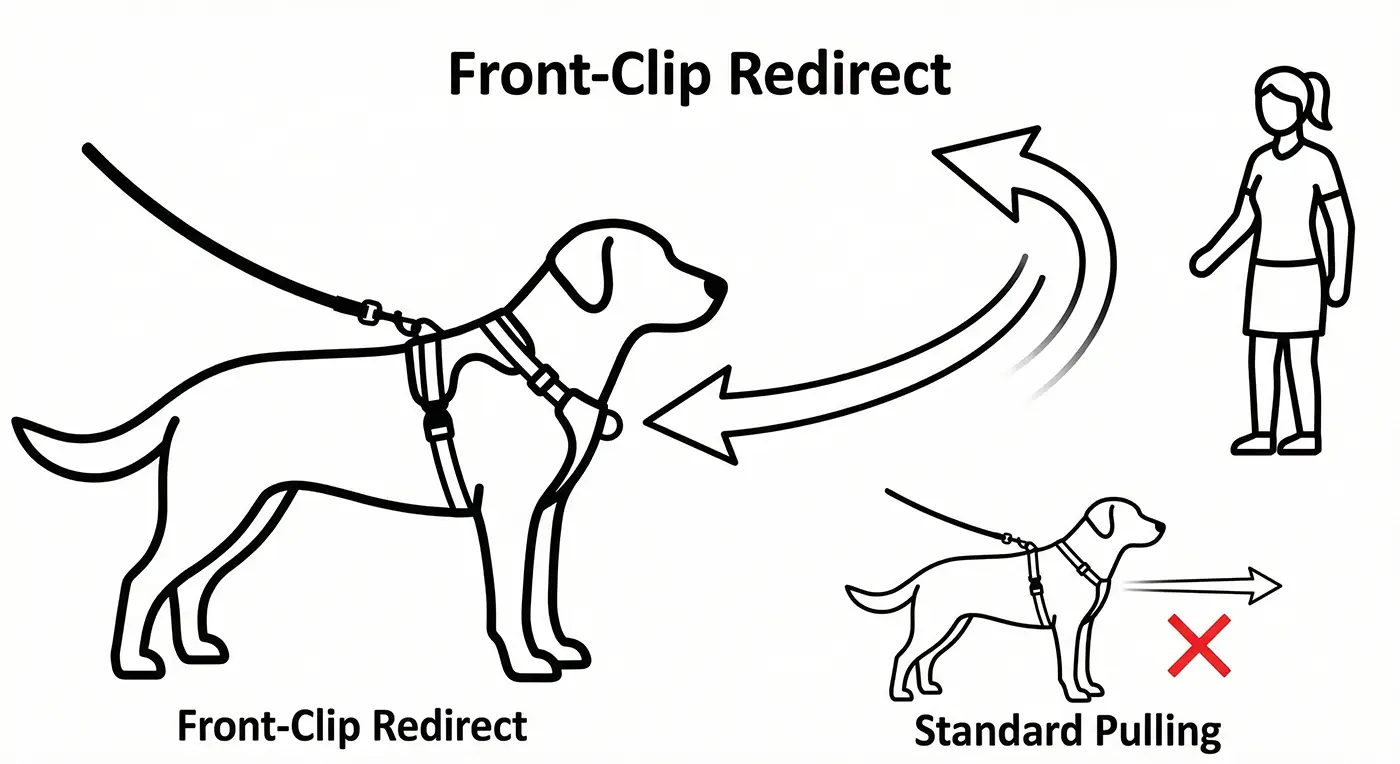
Yes, a front-clip harness is highly effective because it physically redirects the dog toward you when they pull. This humane tool discourages pulling without causing pain or airway restriction.
How can I tell if my dog's indoor accidents are due to a medical issue or poor training?
Sudden regression in an adult dog is often a red flag for medical conditions like a UTI, diabetes, or kidney disease. If the dog sniffs and circles before urinating, it’s likely a training issue; if they strain or produce bloody urine, visit a vet immediately.
What is the difference between territorial marking and submissive urination?
Marking usually involves small amounts on vertical surfaces and is common in intact males. Submissive urination occurs during greetings or scolding; in these cases, you should build the dog’s confidence and avoid all punishment.
Should I scold my dog if I find an accident they left hours ago?
No. Dogs cannot connect punishment to an event that happened in the past. Rubbing their nose in it only creates fear and destroys trust without teaching them where the correct potty spot is.
What is the safest timeline for introducing a new dog to a resident cat?
A successful introduction typically takes 2-4 weeks. Start with total separation and scent swapping for the first week, followed by visual contact through a baby gate where both pets are rewarded for calm behavior .
What are the biggest mistakes when introducing dogs and cats?
Never hold the cat and let the dog approach, as the cat will feel trapped and may strike out. Also, do not leave them unsupervised for at least the first 30 days until their relationship is fully stable.
Is my cat being spiteful when she knocks glasses or plants off the counter?
Cats don’t understand spite; they knock things over due to prey instinct (mimicking pawing at prey) or simply to get your attention . If you yell or chase them, they learn that “knocking = owner entertainment”.
How can I redirect my cat’s energy away from my valuables?
Ignore the behavior—clean up silently with zero reaction. To provide a better outlet, use interactive tools like the SnnyPet ZY-245 remote laser to satisfy their hunting drive in a controlled way.
Is declawing a humane way to protect my sofa from cat scratching?
No. Declawing is a painful amputation of the last toe joint, not a simple nail trim. It is banned in many countries and can lead to long-term physical and behavioral issues.
Why does my cat ignore the scratching post and use the carpet instead?
Cats scratch to mark territory; place the post directly next to the furniture they are currently damaging, not in a hidden corner. Also, experiment with different materials like sisal rope, cardboard, or carpet to find their specific preference.
Why does my cat bring me dead mice or birds as "gifts"?
Your cat isn’t giving you a gift; they think you are a terrible hunter and are trying to provide for you. This is remedial hunting behavior where they treat you as part of their colony.
How should I respond to a dead "gift" without hurting my cat's feelings?
Stay calm and praise them briefly, then dispose of the animal discreetly. To reduce hunting, keep your cat indoors during dawn and dusk prime hunting hours and use a collar bell.
How often should I bathe my dog to keep them smelling fresh?
Most dogs only need a bath every 4-8 weeks. Short-coated breeds like Beagles can go 6-8 weeks, while double-coated breeds like Huskies only need bathing every 8-12 weeks to avoid damaging their natural oils.
Can too much bathing cause dry skin or allergies in dogs?
Yes. Over-bathing strips the skin of essential oils, leading to irritation and dryness. Always use a pet-specific shampoo, as human products have the wrong pH balance and can cause dermatitis.
How can I trim dog nails if they are terrified of the clippers?
Don’t force it; desensitization is key. Spend a week just touching their paws with the clipper nearby while giving treats, and only aim to trim one nail per session once they are comfortable .
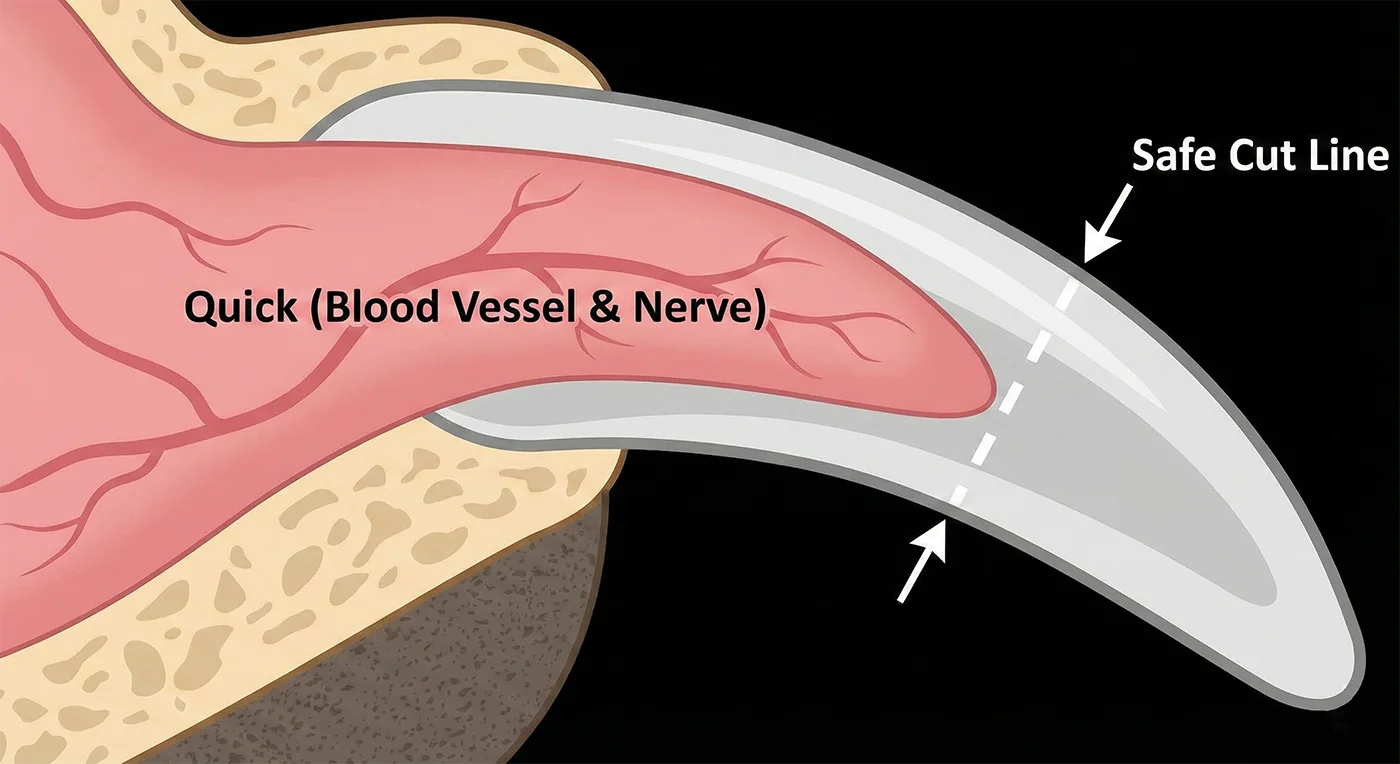
🐾 Pro Tips for Safe Nail Trimming
For Light-Colored Nails (Visible Quick): Follow the diagram and maintain a distance of at least 2mm from the pink area (the quick). Make a clean, swift cut to avoid crushing the nail.
For Black Nails (The Invisible Challenge):
Incremental Trimming: Cut only 1-2mm at a time. Never try to trim the entire length in one go.
Inspect the Cross-Section: Check the cut surface after each snip. If the center looks dry, chalky, or solid white, it is safe to continue.
Watch for the “Dark Dot”: As you get closer to the quick, a small, dark, and slightly moist-looking circle will appear in the center (it looks like a tiny pupil). STOP IMMEDIATELY! This is the beginning of the blood vessel. One more millimeter and your pet will experience pain and bleeding.
Emergency Preparedness: No matter how experienced you are, always keep a bottle of Styptic Powder within reach. Accidents happen, and being prepared ensures your pet’s comfort and safety.
What should I do if I accidentally cut the quick and the nail starts bleeding?
Stay calm—your panic will make the dog more fearful. Apply styptic powder, cornstarch, or flour with firm pressure to the tip of the nail to stop the bleeding.
Is excessive thirst in pets a sign of a serious medical condition?
Yes, increased drinking and urination are red flags for conditions like diabetes, kidney disease, or Cushing’s disease . If an older cat or middle-aged dog suddenly starts drinking significantly more, consult a vet immediately.
How much water is "too much" for a dog to drink daily?
A general rule of thumb is more than 100ml per kg of body weight per day (e.g., a 20kg dog drinking over 2L). When visiting the vet, bring a fresh urine sample (less than 12 hours old) to assist with the diagnosis.
Is it legal or safe to use a pet GPS tracker for a child or elderly relative?
While technically possible, using a pet tracker on a human is ethically and legally complex. Tracking another adult without their consent may violate privacy laws, and the device is physically bulky for small human wrists.
Can the G761 tracker be used as a medical alert or fall detection system?
No. The SnnyPet G761 is not FDA-approved as a medical device. It should not be relied upon for critical health monitoring, as it lacks specialized features like fall detection or direct emergency services integration.
Can dogs hear electronics buzzing that humans cannot?
Yes. Household appliances like refrigerators or routers emit high-frequency sounds up to 40-60 kHz. While silent to us, these noises can be intrusive or startling to dogs, causing them to bark at what appears to be “nothing”.
Why is human shampoo bad for a dog's skin?
Dogs have a different skin pH level than humans; human shampoo is too acidic and can damage the dog’s acid mantle (protective layer). This leads to dryness, irritation, and an increased risk of fungal or bacterial infections.
What if I don't have styptic powder after cutting a nail too short?
In an emergency, you can use common household items like cornstarch or flour. Apply a thick layer with pressure to the bleeding nail tip and keep the dog still for 5 minutes until a clot forms.
How do I collect a urine sample from my pet for the vet?
Use a clean, dry container to catch the mid-stream urine during their first walk of the day. The sample must be refrigerated and delivered to the vet within 12 hours to ensure the results are accurate.
Why does my cat bring me live animals instead of dead ones?
This is an “advanced” hunting lesson. Mother cats bring live prey to their kittens so they can practice the “kill bite” themselves; your cat is trying to give you the same remedial training.
Why does my SnnyPet camera take longer to load on Android 14?
There is a known compatibility issue with Android 14’s background data management and the current app version. We are currently beta-testing a fix to ensure smoother real-time streaming for all Android users.
Can activity trackers detect early signs of arthritis in senior dogs?
By auditing daily activity trends, devices like the G761 allow owners to monitor mobility levels. A consistent decrease in “Active Minutes” can be a prompt for a veterinary check-up.
How is AI changing the way we monitor pet health and behavior?
AI “audits” behavior patterns. For instance, the ZY-245 monitors feeding habits, allowing you to detect anomalies in eating behavior that standard feeders might miss.
Why is the industry shifting toward "Buy-and-Own" pet technology?
Transparency is the driver. Many pet owners prefer upfront pricing over monthly fees. Our audit of products like the G761 prioritizes long-term value and honest hardware ownership.
What is the risk of "Over-Automation" in pet feeding?
Psychological audit: While AI feeders like the ZY-245 provide precision, owners should still maintain a human connection. Use the two-way audio and manual treat dispense features to ensure technology enhances, rather than replaces, your bond.
How does GPS technology impact a pet's sense of freedom?
Freedom Audit: GPS tracking like the G761 actually provides more freedom. It allows owners to grant pets more off-leash time in safe areas, knowing they have a 7-mode GNSS “safety net” to rely on.
Is "Sound Pollution" an issue with smart pet devices?
Acoustic Audit: Cheap devices can emit high-frequency coil whine. Professional hardware like the ZY-245 is audited for silent operation to ensure the device doesn’t disturb a pet’s sensitive auditory range.
How to audit "Wearable Ergonomics" for long-term comfort?
Neck Health Audit: Always check the weight-to-size ratio. The Q12 uses a lightweight, curved design to minimize pressure on the trachea, a standard essential for micro-breeds like Chihuahuas or Yorkies.
What are the IoT security protocols for pet cameras?
Privacy Audit: Professional systems like the ZY-245 use end-to-end encryption for video streams. Always avoid cameras without clear security documentation to prevent unauthorized visual access to your home.
The evolution of "Humane Training": Why is vibration winning?
Ethical Audit: Modern behaviorists prefer interruption over pain. The Q12 represents this shift by using vibration to interrupt obsessive barking, allowing the pet to learn through distraction rather than fear.
Understanding "Global Roaming" limitations for pet trackers.
Connectivity Audit: While the G761 uses global LTE-M/4G standards, always audit regional network coverage before travel to ensure continuous tracking service across international borders.
The future of "Behavioral AI" in pet care.
Intelligence Audit: The next frontier is predictive analytics. Current AI, like that in the ZY-245, is already auditing patterns to alert owners to habit changes, paving the way for truly proactive pet health management.