By Snny ✅ | Pet Tech Strategist | March 19, 2026
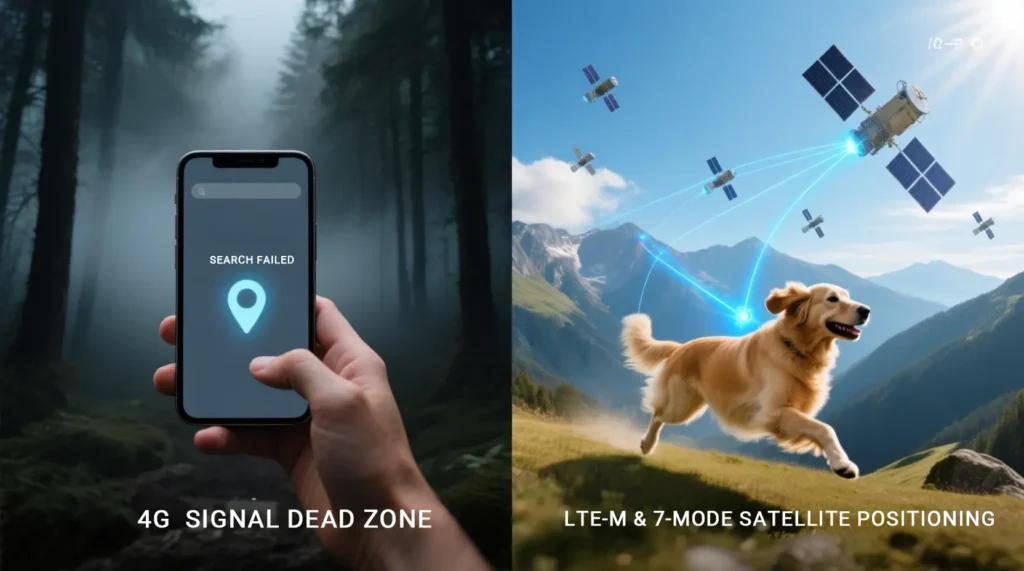
Snny (Experience Officer): “I’ve seen too many hikers frustrated because their ‘$200 tracker’ showed their dog 500 meters away from their actual location. In the wild, ‘standard’ isn’t good enough.”
Mark (Safety Engineer): “Most consumer GPS units rely on basic 4G bands that struggle with forest canopy or deep valleys. For true safety, you need hardware that audits the signal environment in real-time.”
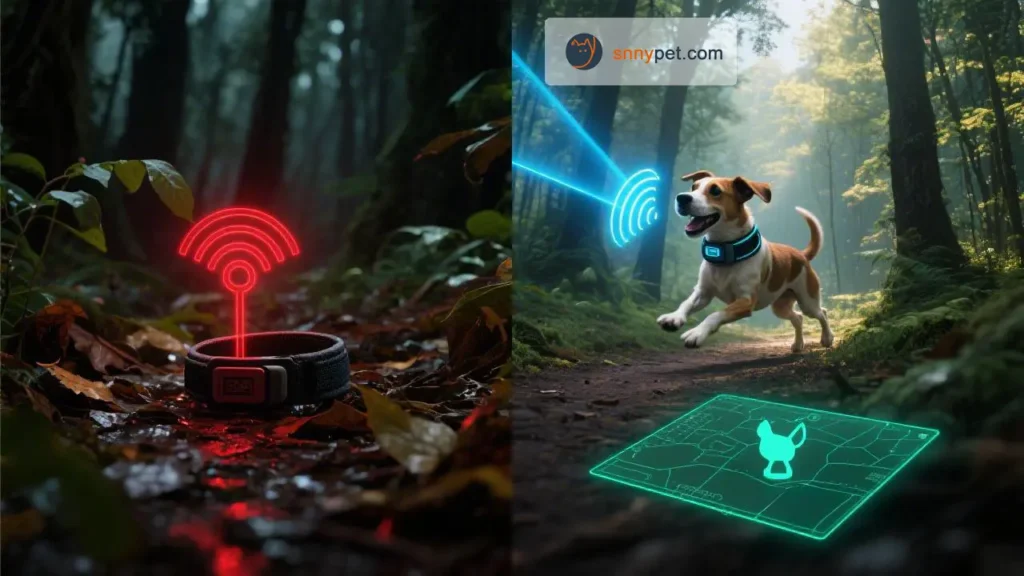
Most trackers on the market are designed for suburban parks, not rugged trails. When you hit a signal dead zone, traditional cellular trackers experience “Ghosting”—showing a stale, inaccurate location that could be kilometers off.
The Audit Finding: Standard 4G modules have poor signal penetration under dense foliage.
The SnnyPet Fix: Our hardware utilizes LTE-M technology, specifically engineered for lower-power, higher-penetration connectivity in remote areas.
If you only rely on GPS, you are limiting your pet’s safety net. In 2026, the standard for elite precision is multi-constellation auditing.
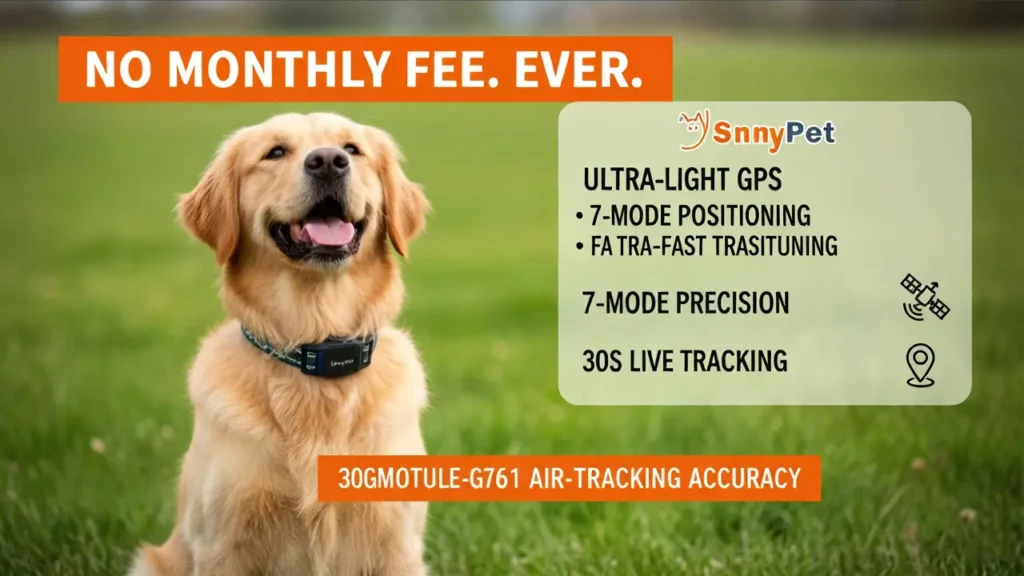
The G761 Standard: The G761 doesn’t just use GPS. It audits signals from 7 different modes including GPS, BDS, GLONASS, and Galileo.
Mark’s Technical Audit: “By checking seven different satellite arrays simultaneously, the G761 achieves a ‘Closed-Loop’ of location data that standard trackers simply can’t match.”

Safety in the wild isn’t just about dots on a map; it’s about being able to see and communicate with your pet when they are out of sight.
Remote Visuals: For those managing basecamps or cabin stays, the ZY-245 provides a dual-lens “visual anchor” to ensure your pets are resting safely while you prepare the next trail.
Humane Field Correction: The to Q12 uses haptic vibration and acoustic triggers to redirect a dog’s attention away from wildlife without the use of painful shocks.
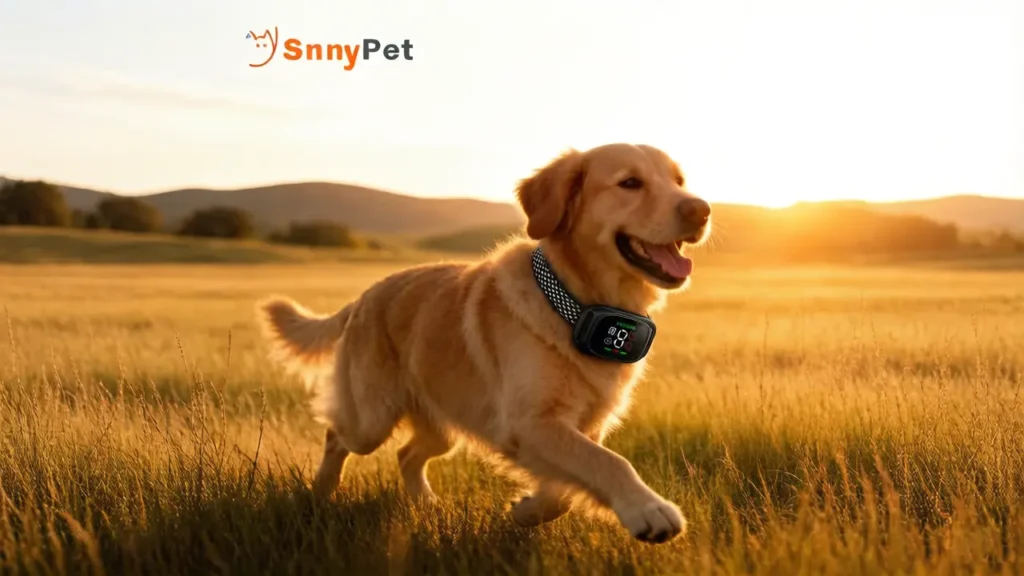
The 2026 audit of outdoor pet tech proves that “Monthly Fees” do not equal “Better Service.”
The Takeaway (Quote Box):
“In the wild, reliability is the only currency that matters. If your tracker requires a monthly ‘tax’ but fails under a few trees, it’s a liability, not a tool.”
Absolutely not. The G761 uses a 7-mode hybrid system (GPS+BDS+GLONASS+Galileo+QZSS+LTE+WiFi). Accuracy is about the chip and the satellites, not the subscription bill.
A single camera only tells you if food is in the bowl. The ZY-245’s Dual-Lens tells you why they aren’t eating—are they distracted, feeling unwell, or is there a guest in the room?
Yes. The Q12 uses high-frequency vibration and sound triggers that interrupt the barking cycle. It’s about communication and habit-breaking, which is more effective long-term than fear-based shock.

SnnyPet
Engineered by Science, Inspired by Love.
© 2026 SnnyPet. All rights reserved.